160 Million Views and Counting: How X-Team Designer Charles Postiaux Approaches Photography
By: X-Team
November 4, 2021 3 min read
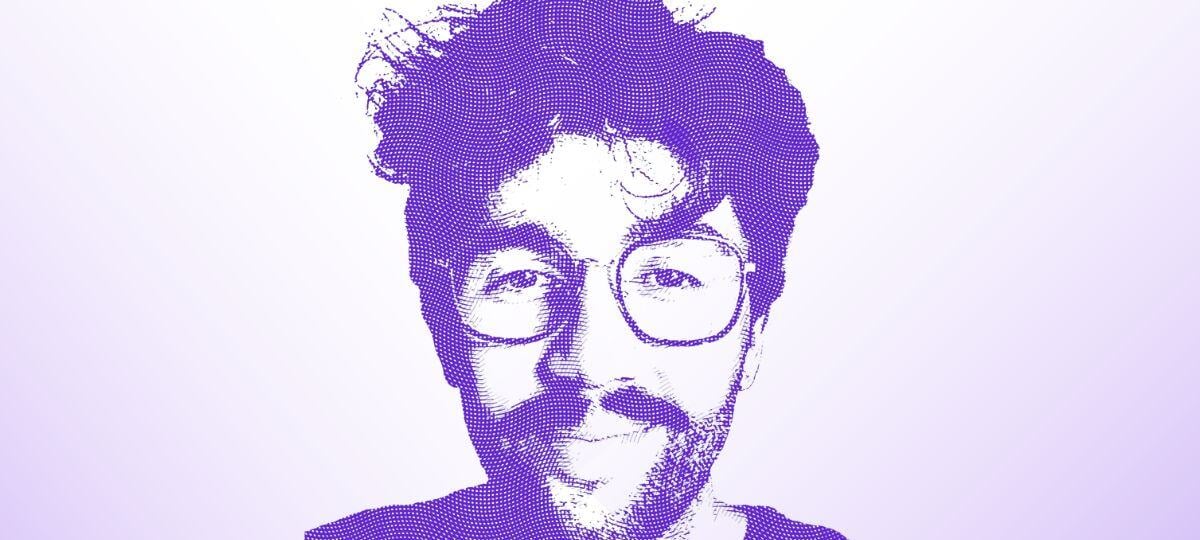
Charles Postiaux travels with a backpack. Sometimes two. Everything he needs to make photographs that have been viewed over 160 million times fits inside them.
Postiaux, a UI/UX designer at X-Team, got his first camera in Paris during a 3D and VFX program — a school-issued body and kit lens for a photography class. He had never been interested in photography before. Then he pressed the shutter and something changed. He became fascinated by how something quite ordinary in real life could look remarkable in a single frame.
In this story, Postiaux traces how a Paris classroom sparked a creative practice, explains why he puts his work on Unsplash for free and describes the unexpected ways photography has shaped his design work.
What a Camera in Paris Taught Him
The school was studying both digital tools — 3D, After Effects, Photoshop — and traditional art forms including photography, video and storyboarding. Students received a camera and a lens and were assigned to shoot based on a self-chosen theme: product photography, long exposure, architecture, lighting.
That first shoot changed how Postiaux thought about creative work. "I tried to snap photos that had depth and interesting angles, and was fascinated with how something quite normal in real life could look amazing in a photo," he says.
He draws a direct line between photography and design. Both disciplines put the creator in front of infinite options with no obvious correct choice. "In design, there's no limit to the work you can create," he says. "Sometimes, it's overwhelming to face a blank page and realize you will have to choose one design over the innumerable other designs you could choose. Photography is the same." The whole world is the subject, every second offering a different picture, every step a different angle.
What holds his attention — in both fields — is the particular tension between freedom and constraint. "You can create your own story," he says. "There are an infinite number of ways you could do something, but you can only pick one. You are in total control of this choice, and I love this mix of freedom and heavy pressure."
Why He Shares His Work for Free
Postiaux shoots almost exclusively when traveling abroad. The logic is deliberate: at home, he filters what he sees; in a foreign country, there's no established context to filter against, so his eyes adjust differently. His preferred subject is architecture — not because he set out to specialize in it, but because strong architectural subjects are easy entry points. "It's easy to take a photo of a beautiful subject," he says, "but harder to take one of a subject that's overlooked." Most shots don't make the cut. The photos visible on his Unsplash page, he notes, represent roughly 1% of everything he's taken.
He briefly considered monetizing his work before deciding against it on two grounds: he didn't think the photos were strong enough to sell, and he wanted market feedback first. Unsplash, unlike Instagram or Behance, gave him a direct signal. "The best way to know if what you make is valuable is by putting your creations out there and see if people like it or not," he says. With over 160 million views, the signal came back clearly.
His gear reflects the same no-frills logic. He travels with a second-hand Canon 5D Mark II, a UV filter and a Canon EF 50mm F/1.8 STM lens — one of Canon's least expensive. "I believe that being able to improvise is one of the most important skills to develop as a photographer," he says. "Fully learning how to use your gear allows you to improvise and adapt."
How Photography Rewired His Design Thinking
The connection between the two disciplines didn't become visible to Postiaux until a mentor named it for him. The mentor told him he had a natural ability to design because he was a photographer — a connection Postiaux hadn't consciously made.
Photography taught him composition, editing, visual balance and how to tell a compelling story. "Photography and design are fundamentally similar, because they're both about colors, visual balance, and storytelling," he says. Skills acquired through years of shooting abroad now show up in his professional work in ways he wouldn't have predicted.
His advice to photographers starting out — and, implicitly, to designers — is the same: "Know what you want. Think about the style you want and what story you want to tell. Then, it's all about the work. Go out there and take pictures. There are no shortcuts." Learning from others has value, but only up to a point. Like push-ups, he says: you can read everything about them, but eventually you still have to do them.
Ready to build work you're proud of? Apply for an open role at X-Team.
SHARE:


TABLE OF CONTENTS