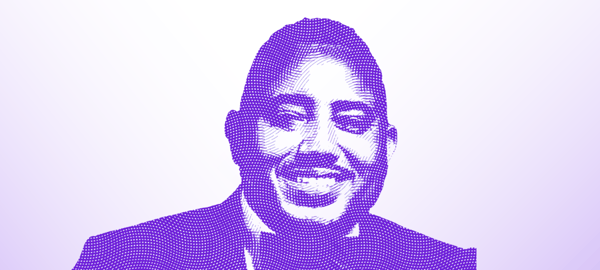
Brian Caldwell on Why He Left Florida for Seoul — and Would Never Go Back
By: X-Team
August 3, 2021 3 min read

Brian Caldwell's first international trip was a 20-hour flight to South Korea. He landed on a Sunday evening and started work Monday morning.
There was no gradual introduction to the country, no travel buffer to adjust. He had moved to be closer to his wife's family — and Seoul became home almost immediately. He hasn't looked back. "Not a chance," he says, when asked whether he'd ever move back to the United States.
In this story, Caldwell, a Senior Software Engineer who joined X-Team a few months before this interview was published in August 2021, describes what drew him to Seoul, what makes daily life there worth staying for and how he manages remote engineering work from a time zone that happens to align surprisingly well with his client.
A City That Earns Its Reputation
Caldwell grew up on the Space Coast of Florida and also lived and worked in Washington State and North Carolina before making the move. South Korea was his first trip abroad — before that, his travels had been domestic: visits to North Carolina, Minnesota, Maryland and Washington, D.C.
Seoul surpassed every expectation. "Seoul is incredibly technological," he says, describing a city that is home to Samsung, LG and Hyundai and has high-speed internet in virtually every corner of the country. It is also, in his account, remarkably clean, safe and easy to live in — a place where a 10-minute walk from downtown Gangnam can take you to a Buddhist temple on a mountain trail.
His 3 favorite things about life in South Korea: the food (he loves spicy food and trying new cuisines, and there is plenty of both); the mountains (beautiful, abundant and very accessible); and socialized healthcare and public transportation (both high quality and affordable). He would not trade any of them.
For first-time visitors, he recommends the main palace, Gyeongbokgung; the Han River park for a lazy afternoon with Korean fried chicken and beer — known locally as 치맥 (chimaek); Namsan Tower, reachable by bus or on foot; and Changdeokgung, a palace with a garden he describes as "fantastic to walk through in the fall or spring."
He visited the DMZ in late 2013 on the USO tour that went to the border buildings in Panmunjeom. The soldiers were "incredibly stoic and intense looking," he says. It was a smoggy day and visibility was poor, but he bought North Korean brandy and some old currency as souvenirs.
The Language Gap, and Living Around It
One of the most candid parts of Caldwell's Seoul life is his relationship with Korean.
한국어 잘 못해요 — he can't speak it well. "I would rank myself at the level of maybe a very large dog," he says. He gets around: ordering food, asking for directions, basic greetings. For the administrative dimensions of daily life, he relies on his wife. He isn't making excuses — he knows it's hard. Where it might take a native English speaker about six months of full-time study to reach conversational Spanish, he says reaching a comparable level in Korean takes around two years of full-time study.
The mental load of engineering work doesn't leave much room for language study. But he was optimistic at the time of the interview — X-Team's resources had given him time and energy to devote to studying more seriously.
The reverse culture shock of returning to the United States briefly underscored, for him, how thoroughly Seoul had become home. Shoes worn indoors. Ill-fitting clothes. A large medical bill. All of it sent him back to Korea more certain than before. The only other country he'd consider relocating to is New Zealand, for its natural scenery.
Remote Work, 1 Time Zone Away
Caldwell works for a company in Australia — which, from Seoul, means almost no timezone friction at all. His client is one hour ahead of him.
The bigger time difference in his day isn't work-related; it's personal. South Korea sits roughly 12 hours ahead of the US East Coast, which means talking with family back home happens in the morning on his end and the evening on theirs. "It isn't too bad," he says.
The alignment between Seoul and an Australian client isn't accidental — it's one of the structural advantages of X-Team's model, where engineers work across global time zones with clients that don't always require overlap with the US. For Caldwell, it means a remote work life that fits naturally around the city he chose to live in, rather than one that forces him to anchor his days to a distant clock.
Ready to build work you're proud of? Apply for an open role at X-Team.
SHARE:


TABLE OF CONTENTS