
Mohamed Kande, global chairman of PwC, has a problem.
"Across the PwC network, we are looking for hundreds and hundreds of engineers," he told the BBC. “We just cannot find them.”
Meanwhile, Zach Taylor graduated from Oregon State University in 2023 with a computer science degree and applied to nearly 6,000 tech jobs. He landed 13 interviews but received zero offers.
He couldn't even get hired at McDonald's. They told him he lacked experience.
Both stories are true. And they illustrate a big, industry-wide issue.
The data says there is indeed a labor shortage. The Bureau of Labor Statistics projects 317,000 new IT job openings annually through 2034. Every industry report warns of a continued IT skills shortage. Tech giants and consulting firms alike are racing to add tens of thousands of technologists to their ranks.
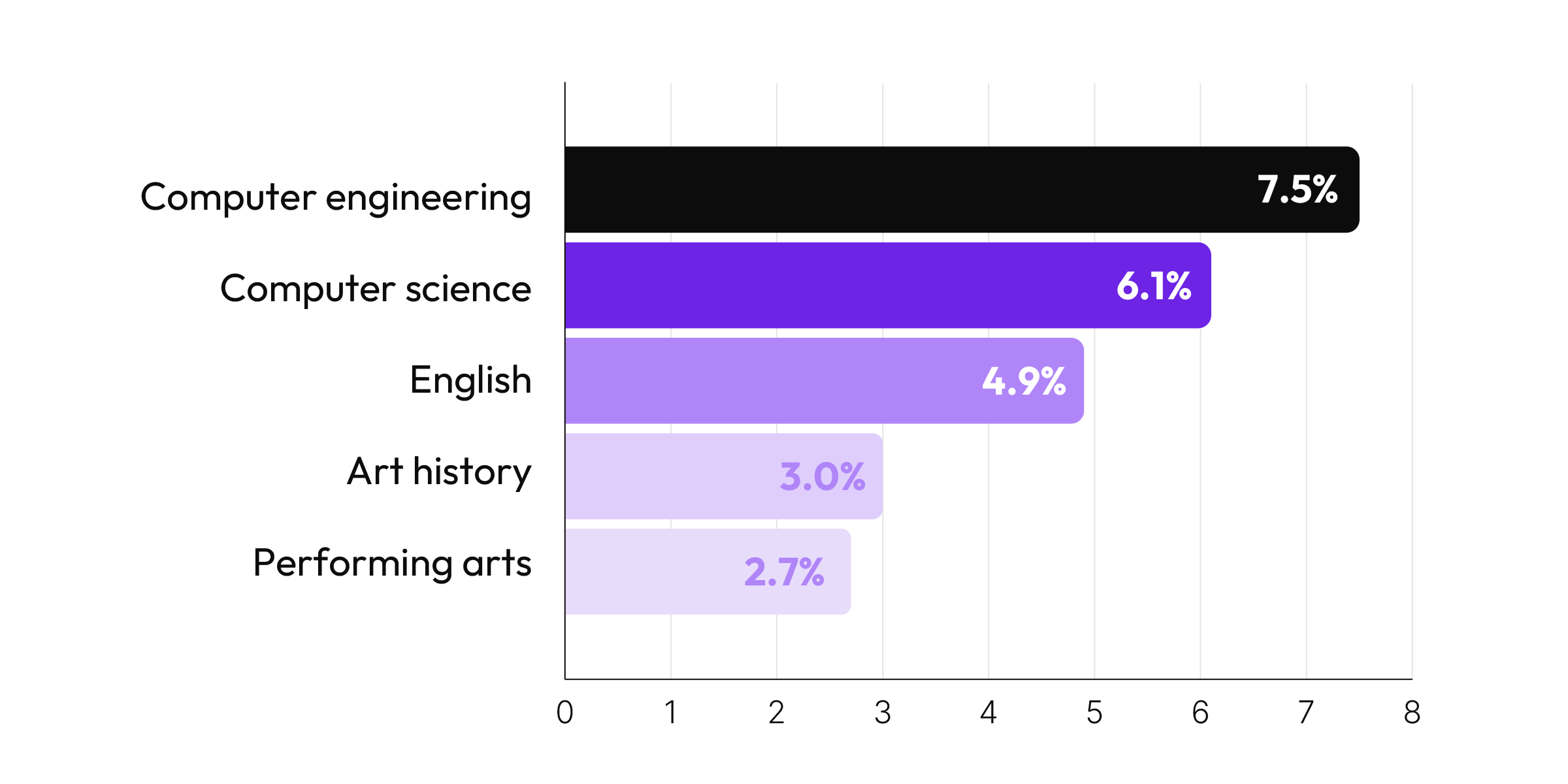
The data also says there are available candidates for those jobs. Computer science and engineering graduates face 6.1%-7.5% unemployment. U.S.-based tech companies laid off over 100,000 people in 2025 alone. Entry-level software development job postings on Indeed have fallen 71% since February 2022.
The contradiction reveals what's actually happening: a talent mismatch, where neither side has the right expectations or direction.
Companies say they need engineers, while universities produce skilled computer science graduates, and developers struggle to upskill to stay ahead of changes. Everyone involved is talking past each other, with adverse effects on people and organizations alike.
CS Grads Have Higher Unemployment Than Art History Majors
For decades, the dearth of tech talent has been wielded as a reassurance to young workers and a solution for older ones in changing and shrinking industries. “Learn to code” became a rallying cry for professionals seeking stability, career growth, and a healthy paycheck, as well as for parents and educators seeking to set students on a promising career path.
The evidence for this is clear: The World Economic Forum reports that 63% of employers identify skill gaps as a top barrier, particularly for technological innovation. Deloitte projects tech jobs in the U.S. will grow from 6 million in 2023 to 7.1 million by 2034. McKinsey warns of critical shortages in artificial intelligence, cloud computing, and cybersecurity tech workers. AI/ML job postings are in high demand, up 1,800% since 2023.
But the path to securing those jobs has not been as clear: The Federal Reserve Bank of New York, which tracks unemployment for recent college graduates, shows a high availability of early-career talent. In fact, tech unemployment rates are significantly higher than those of majors that have traditionally lagged in hiring:
"I just graduated with a computer science degree, and the only company that has called me for an interview is Chipotle," Manasi Mishra, a Purdue University graduate, said in a TikTok video that went viral last summer. PwC US announced that it would cut entry-level hiring by a third over the next three years, yet it also claims it cannot find thousands of engineers.
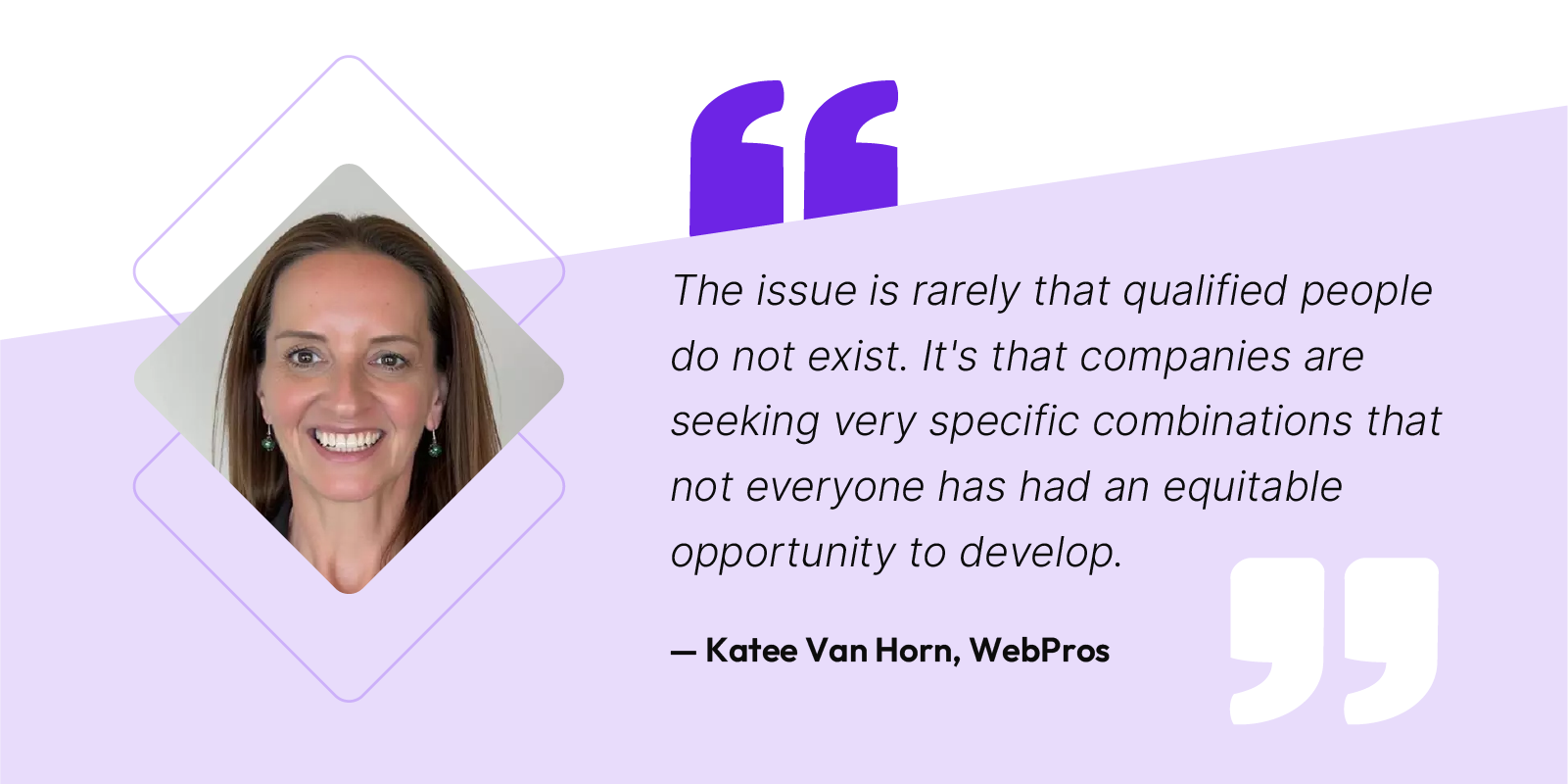
"The narrative of a sweeping shortage is overstated," says Katee Van Horn, chief people officer at WebPros, a company that manages over 900,000 servers and 85 million domains globally. She sees strong skills rather than a persistent tech talent shortage, especially when considering the available international talent.
“Learn to code” might not have been a panacea for success, given lagging employment and the rise of AI tools that can code at a basic level. However, there are other challenges regarding the value of specific skills from newer graduates.

"From a global perspective, there really isn't a shortage, there is actually a surplus," says Jay Polaki, CEO and co-founder of HR Geckos, an HR automation platform. “The real problem with hiring is the salary expectations.” Polaki finds that early-career professionals are often the most out of touch with what the market will bear.
That wake-up call is also coming for other professionals.
What Misalignment Looks Like: Demand Rising in Some Areas, While it Craters in Others
While the early-career challenges are clear, they don’t fully explain the talent mismatch. Organizational and market shifts have also reshaped the landscape for experienced professionals.
Accenture added nearly 40,000 AI and data professionals in two years. EY has brought on 61,000 technologists since 2023. McKinsey told Business Insider that straight strategy advice, the work consultants traditionally did, now accounts for only 20% of their business. The majority of their work is now on digital transformation projects and other initiatives that require deep implementation expertise.
How organizations define their roles and assess skills is the main challenge, according to Van Horn.
PwC wants engineers who understand enterprise architecture, cloud migration strategies, and organizational change management. The market is flush with talent in traditional programming languages and engineering. All of them are tech skills, but they are distinct from one another.
Part of the problem is how we hire.
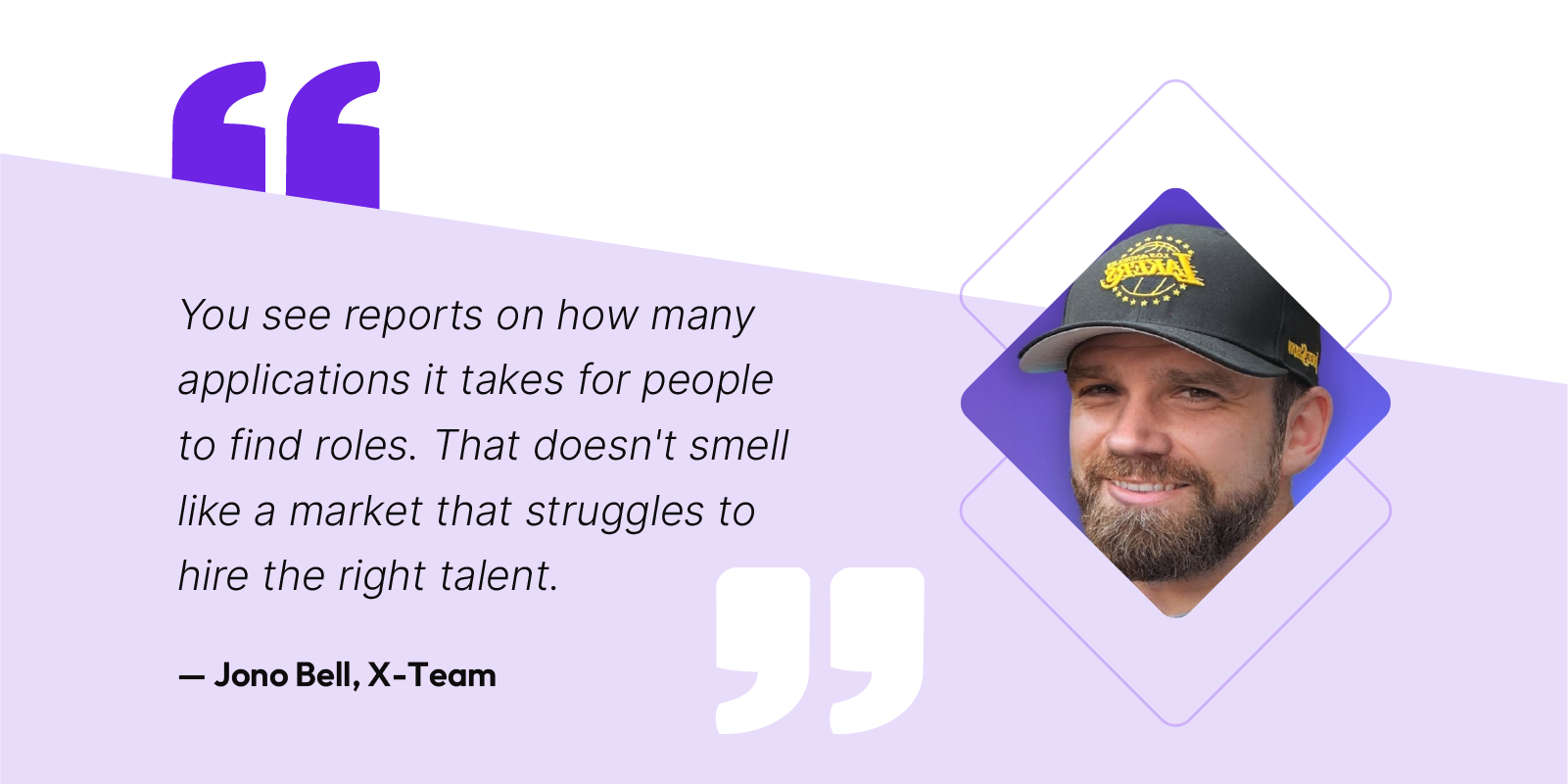
"You see reports on how many applications it takes for people to find roles," says Jono Bell, VP of product and innovation at X-Team. "That doesn't smell like a market that struggles to hire the right talent." Bell argues that at least some of the hiring difficulty is self-inflicted.
Companies write job descriptions asking for five years of experience with a technology that has only existed for three. They require on-site presence for work that could be done remotely. They filter for pedigree when they should be measuring for capability. The result: skilled workers with the wrong credentials or preferences are filtered out, while the talent pool shrinks to a handful of candidates with the exact skill sets listed.
That disconnect runs deeper than job descriptions. X-Team's 2026 AI Talent Readiness Report found that how an organization defines AI roles is the single strongest structural predictor of training outcomes, measurement maturity, and governance — three times more predictive than org size or budget.
"Hiring processes may unintentionally reduce access to strong candidates by defining roles too narrowly or imposing unnecessary location requirements," Van Horn notes.
IBM research shows tech skills become outdated in roughly 2.5 years. A candidate who learned React a few years ago now needs to learn Next.js and server components just to stay competitive in emerging technologies. Upskilling and reskilling need to be part of any organization’s long-term talent strategy.
Candidate fraud also muddies the waters. "Candidates have always boosted their resumes with skills that they've never even heard of," Polaki says. "When we ask them to actually code in the interview, they don’t know how to do basic Python." She’s caught people using earpods under over-the-ear headphones to get fed answers to technical questions or depending on AI.
AI tools aren’t just affecting candidate fraud and vibe coding. They are accelerating the mismatch.
Companies can hire senior engineers who use AI to double or triple their output, rather than hiring three junior developers who need mentorship and hands-on guidance. While entry-level candidates can't even break in, tech employees with years of experience suddenly find themselves competing against AI-augmented seniors.
The talent mismatch only gets messier.
Can Outsourcing or Offshoring Solve the Tech Talent Mismatch?
PwC cited transformation efforts, AI, and “acceleration centers integration” — or offshoring — as reasons for cutting entry-level hiring, even as they beg for more talent.
And that sort of offshoring can be effective for companies that aren’t finding what they need in the U.S. or among early-career technologists, according to Bell. "There seems to be an over-reliance on local markets in general," he observes. "You have to fish in a local shallow pool for talent and compete.”
Plenty of companies are already doing this. Global IT outsourcing spending hit $660 billion in 2025, up from $520 billion in 2023. Nearshore outsourcing, like hiring in Latin America and Eastern Europe, grew 21% year-over-year in 2025.
Unlike in years past, cost savings isn’t the primary driver for outsourcing anymore. "One reason to go offshore is to find the absolute rock stars out there in the world that just don't live close to you," Bell says. "Don't go to India to find cheap talent. Go to find incredible talent."
The shortage often disappears when companies expand their search radius. A senior Rust engineer might not exist in Austin, Texas, but several qualified candidates may be working in São Paulo, Kraków, and Bangalore.
"The organizations that succeed are those that build inclusive systems and embrace the full potential of a global workforce," Van Horn says.
Van Horn emphasized that there are no quick fixes for the talent mismatch issue, and outsourcing and offshoring won’t solve all hiring problems. "I think outsourcing can absolutely play a role, but outsourcing only works when it's intentional." She recommends incorporating it into a more holistic talent strategy.
A Real Solution: Upskill Your Team, Hire for Capability, and Partner Globally
Regardless of the reason, most organizations struggle to hire capable tech talent. There is both an opportunity and a threat in trying to fix that. Companies can’t pause their efforts to fill roles and figure this out while their roadmap gets delayed another quarter. For companies that do take action, there’s a genuine opportunity to get ahead. Here’s the combination that’s working best for organizations.
Upskill Your Existing Team
Usually faster and cheaper than external hiring, upskilling preserves institutional knowledge while rewarding valuable employee loyalty.
"I would ask you to think about how long it would take to train your current employee versus hiring someone with that skill set,” says Polaki. “Give six months to your team members and try to upskill them." Her argument focuses on prioritizing where to bring in outside talent versus people who can likely pivot to meet the moment of need.
Fifty-six percent of companies now prioritize internal upskilling as their top strategy for building technical skills. This is one of three core strategies to recruit talent that works for the long term.
The urgency is backed by research: among organizations where leaders named skills gaps as their top AI constraint, 51% had no structured training program in place to address it — a gap that tracks with how rarely role-level AI accountability gets formalized.
Training a mid-level engineer to learn Kubernetes takes three months. Finding a senior Kubernetes engineer who's also a good cultural fit could take nine months. It’s one way to take control in a talent market that feels chaotic while also driving a win-win for employees and early- to mid-career talent.
Shift to Evidence-Based Hiring
Filter for capability, not credentials. Skills-based assessments reveal what candidates can actually do.
"We're all going to quickly realize that the classical quality signals are not going to be enough anymore, like your degrees, like your cover letters, like your CVs," Bell says. "Instead of looking for experience with a particular technology, you're looking for people who have experience with other technologies that are a signal that they're competent." He sees a future where people can prove potential instead of guessing and hoping.
A developer who's mastered one complex framework can learn another. An engineer who's debugged distributed systems in one language can debug them in another.
Skills-first hiring has tripled over the past two years, but it remains a niche practice for most organizations.
This requires organizations to change what they expect of a new hire on their first day. Like upskilling, it will take time and require more planning.
Leverage Outsourcing Strategically
A proven approach to without sacrificing quality is to work with a global partner to access specific expertise while your internal team focuses on core differentiation.
"Use partners to fill short-term gaps or bring in specialty skills,” Van Horn says. With that part unlocked, “internal teams stay focused on the long-term direction and the core work that differentiates your business."
Bell says companies that experience difficulties can use that as an indicator of when outsourcing is appropriate. “When you start to run into talent shortages, stop fishing in that small shallow pool and find the right partners," he says. There are more options and models than ever to supplement staff in a way that’s culturally compliant while still keeping your development on track.
The best companies blend all three approaches. They might not be on all the time, but they are all part of the solution as priorities shift.

Match Talent Better or Keep Worrying About Talent 'Shortages'
The tech industry’s talent-matching problem boils down to this: There is no shortage of software engineers who can code or handle the technical work. There is a shortage of high-skilled professionals who can debug distributed systems at scale or bring AI-forward solutions to client-facing roles.
That misalignment runs deep on both sides of hiring. But there are ways of solving it.
The key is knowing your organization, your gaps, and where the best talent might be. They could be on your payroll already. They could be overlooked because of a skill or geography requirement that shouldn’t be there in the first place.
"Open up your search, look globally, and tell me if you still have that talent problem afterwards," Bell says.
Get surgical about what you need. Rewrite your job descriptions with actual requirements instead of credential checklists. Hiring the right tech talent starts with clarity about what "right" actually means.
Or keep trying to find the perfect candidate, in the ideal location, with the perfect fit, while your product slips behind competitors.
SHARE: