12 Essential Books for Engineering Managers
July 30, 2025 8 min read
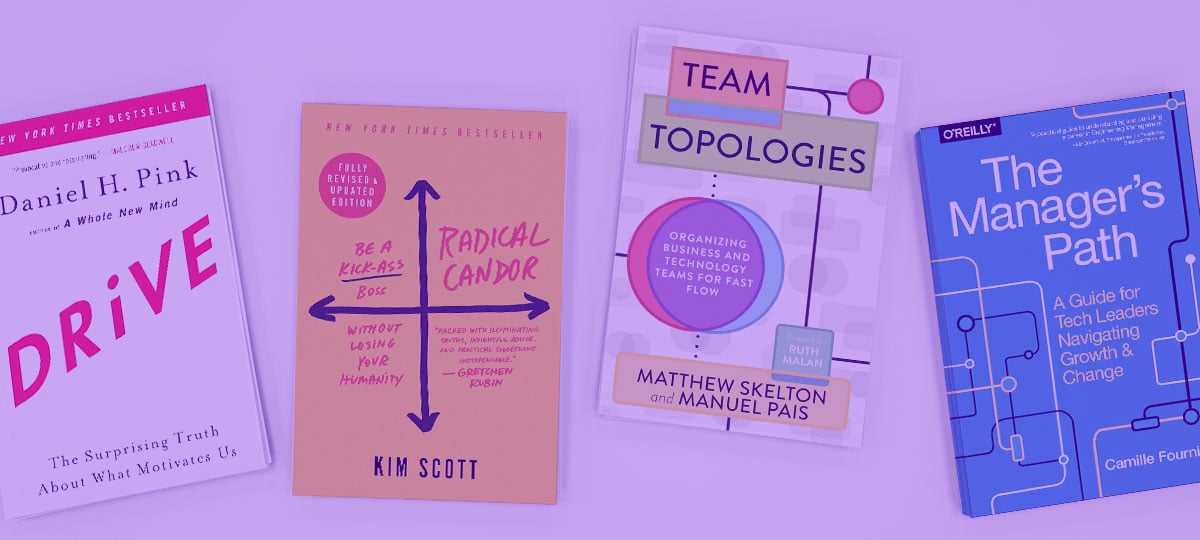
Most engineering managers get promoted to the job because they were great engineers. The best books for engineering managers fill in the gaps that technical expertise can't solve. Start with The Manager's Path by Camille Fournier.
X-Team has built long-term, distributed engineering teams for nearly 20 years. We asked engineering leaders which books changed how they manage, and grouped their picks by the problem each one helps with.
Quick Picks
| Book | Author | Best for |
|---|---|---|
| The Manager's Path | Camille Fournier | Your first year as a manager |
| Managing Humans | Michael Lopp | The people side of leading engineers |
| Remote Engineering Management | Alexandra Sunderland | Teams across time zones |
| Engineering Management for the Rest of Us | Sarah Drasner | Managers who never planned to manage |
| Radical Candor | Kim Scott | Giving direct feedback without losing trust |
| The Intelligence Trap | David Robson | Decision-making on teams of very smart people |
| The Culture Map | Erin Meyer | Working across national cultures |
| Drive | Daniel H. Pink | Motivation without micromanaging |
| Atomic Habits | James Clear | Changing your own habits and your team's |
| Team Topologies | Matthew Skelton and Manuel Pais | Organizing teams as you scale |
| An Elegant Puzzle | Will Larson | Tech debt, migrations and org design |
| Thinking in Systems | Donella Meadows | Seeing feedback loops in a complex team |
Foundational Leadership & Management Skills
These are for leaders moving out of senior IC roles or managing people for the first time.
The Manager's Path
by Camille Fournier
If you're only going to read one book as a new engineering manager, this is it. Fournier walks through each stage of the leadership path, from mentoring as a senior developer to managing managers, with practical, no-nonsense advice.
Why It’s a Must-Read
The Manager's Path treats leadership as something you keep learning rather than a title you receive. It's especially useful for new managers making the move from contributor to coach, and its scenarios give you a structured way to handle each new set of demands.
Managing Humans
by Michael Lopp
A candid, story-driven look at the messy human side of leading technical teams. Lopp draws on his own experience with personalities, pressure and conflict.
Why It’s a Must-Read
Paul DeMott, CTO at Helium SEO, calls it the most influential book in his leadership journey. "It does not read like a management manual, which is exactly why it works," he says. "I needed to understand how to talk to people who code all day and don't want fluff. This book gave me a mental playbook for that."
Remote Engineering Management
by Alexandra Sunderland
Managing a remote engineering team means rethinking onboarding, feedback, career growth and the rituals that keep people connected. Sunderland covers each of them.
Why It’s a Must-Read
Sunderland writes from lived experience. She offers specific strategies for building trust, keeping work visible and supporting engineers across time zones, whether you lead a hybrid team or a remote-first org.
Engineering Management for the Rest of Us
by Sarah Drasner
Written for people who never imagined themselves as managers, this is a practical guide to supporting a team without pretending you have all the answers.
Why It’s a Must-Read
Drasner covers setting boundaries, giving feedback, managing up and building psychological safety. For first-time managers, or leaders who prefer support over control, it makes the case for a quieter, more human way to lead.
Honorable Mentions
- The Making of a Manager, by Julie Zhuo: a relatable guide to the uncertainty of the first months as a manager.
- The Leader Lab, by Tania Luna and LeeAnn Renninger: breaks leadership into small, repeatable habits.
Communication, Feedback & Psychological Safety
These books cover honest communication and feedback your team can act on.
Radical Candor
by Kim Scott
Scott's framework for feedback that challenges directly while caring personally has become a standard reference for building teams that are both safe and accountable.
Why It’s a Must-Read
Alex Smith, co-founder of Render3DQuick.com, values its guidance on "honest communication," which he says is critical when "working with engineers and designers who are detail-oriented by nature and require clear and constructive criticism." He adds that "the direct talk on caring personally and challenging directly has assisted my style of having difficult conversations without losing rapport."
The Intelligence Trap
by David Robson
Robson explains why highly intelligent people fall into flawed thinking, and how to build habits that guard against overconfidence and groupthink.
Why It’s a Must-Read
Chris Lavender, an engineering leader and advisor, calls it a "hidden gem." "I took away many insights that have helped me lead geographically and culturally distributed teams composed of extremely smart folks," he says.
The Culture Map
by Erin Meyer
Meyer shows how culture shapes the way people communicate, give feedback and make decisions. Americans tend to soften criticism, for example, while Dutch colleagues get straight to the point, and that mix causes tension if you aren't ready for it.
Why It’s a Must-Read
Miros Milenkovic, project manager at Privado ID, says, "There were years when I was just carrying it with me in my bag and just take it out and say, 'Everyone needs to read this.'" He adds, "People are not thinking enough about how much these differences actually influence your day-to-day work."
Honorable Mentions
- Peopleware, by Tom DeMarco and Timothy Lister: a lasting reminder that culture, focus and trust make engineering teams productive, and tools don't.
- Influencing Virtual Teams, by Hassan Osman: short and tactical, with clear ways to build engagement and accountability on distributed teams.
Motivation & Change
These books look at what keeps people motivated over time.
Drive
by Daniel H. Pink
Pink uses behavioral science to challenge old assumptions about rewards and pressure. He argues for a steadier foundation: autonomy, mastery and purpose.
Why It’s a Must-Read
Maher Hanafi, senior vice president of engineering at Betterworks, a performance management software company, calls Drive a "game-changer," with the book "transforming my understanding of motivation and how to build truly productive, autonomous teams." If your team needs more autonomy and less burnout, start here.
Atomic Habits
by James Clear
Whether you're working on your own focus or trying to shift how your team works, Clear explains how habits form and how to build better ones, in a framework that's easy to apply.
Why It’s a Must-Read
"One of my favorite books," says Nir Orman, director of e-commerce engineering at Wix. "Whatever skill that you're looking to install, I would call this a new operating system for yourself. You're installing a new version of yourself that has this new skill."
Honorable Mentions
- The War of Art, by Steven Pressfield: for leaders pushing through resistance to do creative work under pressure.
Structuring & Scaling Teams
These books help with dependencies, ownership and org design as a team grows.
Team Topologies
by Matthew Skelton and Manuel Pais
Team Topologies gives you a framework for organizing engineering teams around flow, interaction modes and clear ownership.
Why It’s a Must-Read
It brings operational clarity to leaders managing distributed teams or scaling quickly. DeMott turned to it during a major reorganization. "It saved us months of trial and error," he says.
An Elegant Puzzle
by Will Larson
Larson, a veteran of Digg, Uber and Stripe, takes on the problems specific to engineering leadership. When should your team pay down technical debt? How do you structure teams for long-term growth? How do you run a migration without losing momentum?
Why It’s a Must-Read
Larson brings a systems lens to the human side of the job. Travis Kupsche, director of engineering at Assembly AI, says, "It's very much easy to consume as an engineer," adding that it takes the "amorphous thing of what is management" and "added some structure around it so it wasn't this mushy space that I had to operate in."
Thinking in Systems
by Donella Meadows
Meadows shows the patterns and feedback loops that shape how a team behaves and responds to change. It isn't a management book, but it's valuable for anyone leading something complex.
Why It’s a Must-Read
Rod Hess, director of content marketing at Talivity, found it changed how he understood team dynamics over time. "It helped me zoom out to recognize the feedback loops and other issues that present themselves in a system as complex as a team, and how quick fixes can often backfire," he says.
Honorable Mentions
- The Mythical Man-Month, by Frederick P. Brooks: the classic on why adding people to a late project makes it later.
- High Growth Handbook, by Elad Gil: a practical manual for leaders at fast-growing startups.
- The Self-Assembling Brain, by Peter Robin Hiesinger: how intelligence and complexity emerge, for leaders thinking about AI and systems.
Frequently Asked Questions
What Is the Best Book for a New Engineering Manager?
The best book for a new engineering manager is The Manager's Path by Camille Fournier. It follows the engineering career from senior individual contributor to tech lead, manager and manager of managers, so a new engineering manager can use it in the first year and keep coming back to it as the role grows.
What Is the Best Book on Managing Software Engineers?
Managing Humans by Michael Lopp is one of the most recommended books on managing software engineers. Lopp, a longtime engineering leader, uses stories from his own career to show how to handle personalities, conflict and communication with engineers, which makes it more practical than a general management book.
What Are the Best Books for Scaling an Engineering Team?
The best books for scaling an engineering team are Team Topologies by Matthew Skelton and Manuel Pais, and An Elegant Puzzle by Will Larson. Team Topologies explains how to organize teams around ownership and flow. An Elegant Puzzle covers the decisions that come with growth, including technical debt, migrations and team sizing.
What Are the Best Books for Managing a Remote Engineering Team?
The best book for managing a remote engineering team is Remote Engineering Management by Alexandra Sunderland, which covers onboarding, feedback, career growth and communication for distributed engineers. For teams that span countries, The Culture Map by Erin Meyer explains how cultural differences shape feedback, decisions and day-to-day work.
Keep Your Team Learning Together
These books pay off when a team stays together long enough to use them. X-Team developers join your team as embedded, long-term members and work with one client at a time, so the trust and context you build carry forward. Talk to us about building your team.
SHARE:


TABLE OF CONTENTS