
Martin Krause was called in to assess an AI rollout that looked, by every available metric, like a remarkable success. What he found was a perfect example of the AI skills gap in action.
The company had deployed GitHub Copilot, an AI-powered coding assistant, across its engineering team. Token usage was climbing. Developers were shipping faster. Then Krause, a Frankfurt-based AI consultant and author of The Complete Developer, looked at the code reviews.
Senior engineers had started rubber-stamping pull requests. The volume of AI-generated code was simply too high to review meaningfully. "The reskilling nobody planned for," Krause says, "was teaching engineers to be critical consumers of AI output: when to trust it, when to push back, and how to stay intellectually engaged with code they didn't write."
That rollout had succeeded by every metric the company thought to track. It had failed by every metric that mattered for the output.
The AI skills gap runs wider than any single flawed deployment, though. X-Team's Out of Sync report found that executives report 92% confidence in their organization's ability to source AI talent but the engineers executing that strategy report 29%. Half of those same confident leaders can't staff an AI squad within 90 days. Only 19% can tie AI's business impact to any operating metric.
The distance between those numbers is where AI reskilling can't be outrun by hiring alone.
Why the AI Skills Gap Is Getting Worse
Part of the explanation for this growing gap is straightforward: Artificial intelligence adoption is outrunning supply. IBM estimates roughly half the skills needed to meet current AI demand don't exist in the market. GenAI job postings grew 170% in a single year, and over three-quarters of IT jobs require AI skills. Organizations are competing for the same pool of experienced AI engineers that hasn't kept pace.
But the harder problem is that most organizations are training for the wrong skills. The way AI is reshaping how software gets built hasn't been matched by a corresponding shift in how companies define the capabilities they're developing.
Building AI literacy across a team is achievable. Building the architectural judgment to deploy AI in production is a different problem entirely.
"We are training developers on how to ping an API, rather than how to architect multi-agent systems that can navigate messy, decade-old enterprise environments without breaking them," says Eshaan Jain, a senior product manager at Mphasis with experience spanning Amazon, PwC, and Accenture. "The real gap in the market right now is for 'AI Orchestrators.' The industry is completely misdiagnosing the skills gap."
Krause sees the same misdirection in how companies handle upskilling internally. "The most common failure I see is organizations treating AI upskilling as a one-time training event. A two-day workshop, a Coursera certificate." The assumption that AI is another skill to layer onto existing roles misses the scope of what's actually changed.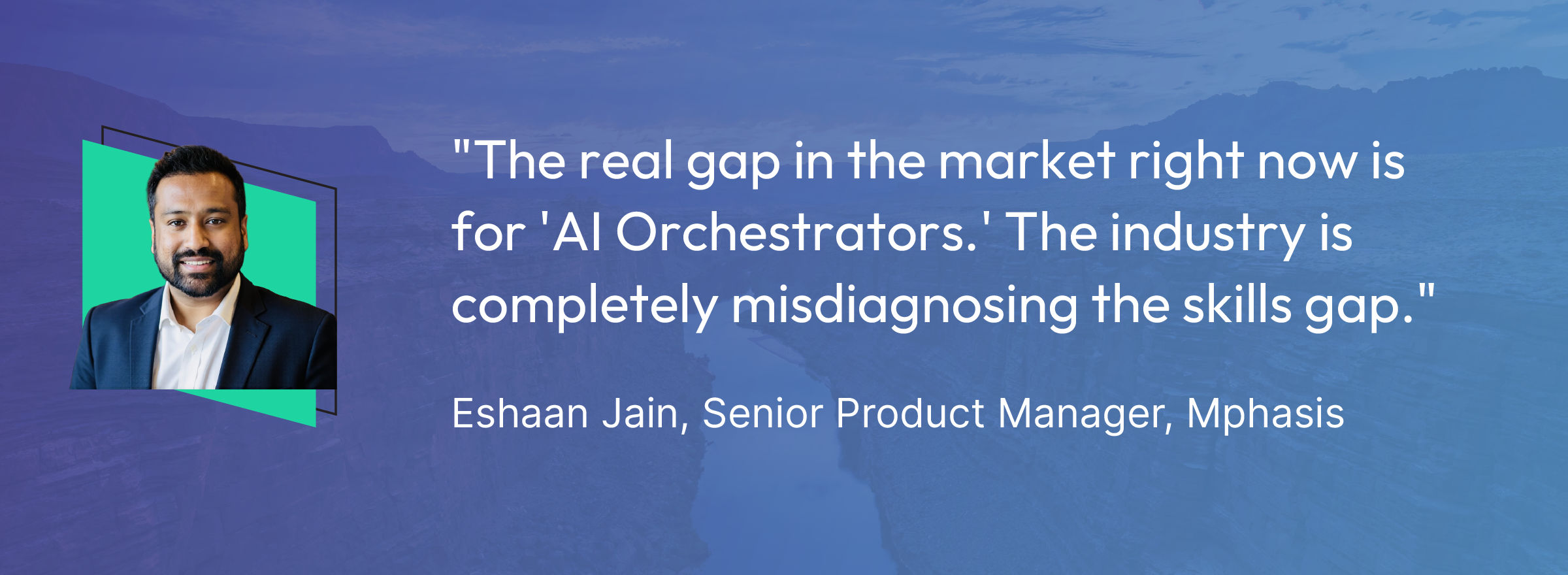
The Real Business Impact of the AI Skills Gap
Krause's Copilot example points to a category of damage: The technical debt building underneath using these tools.
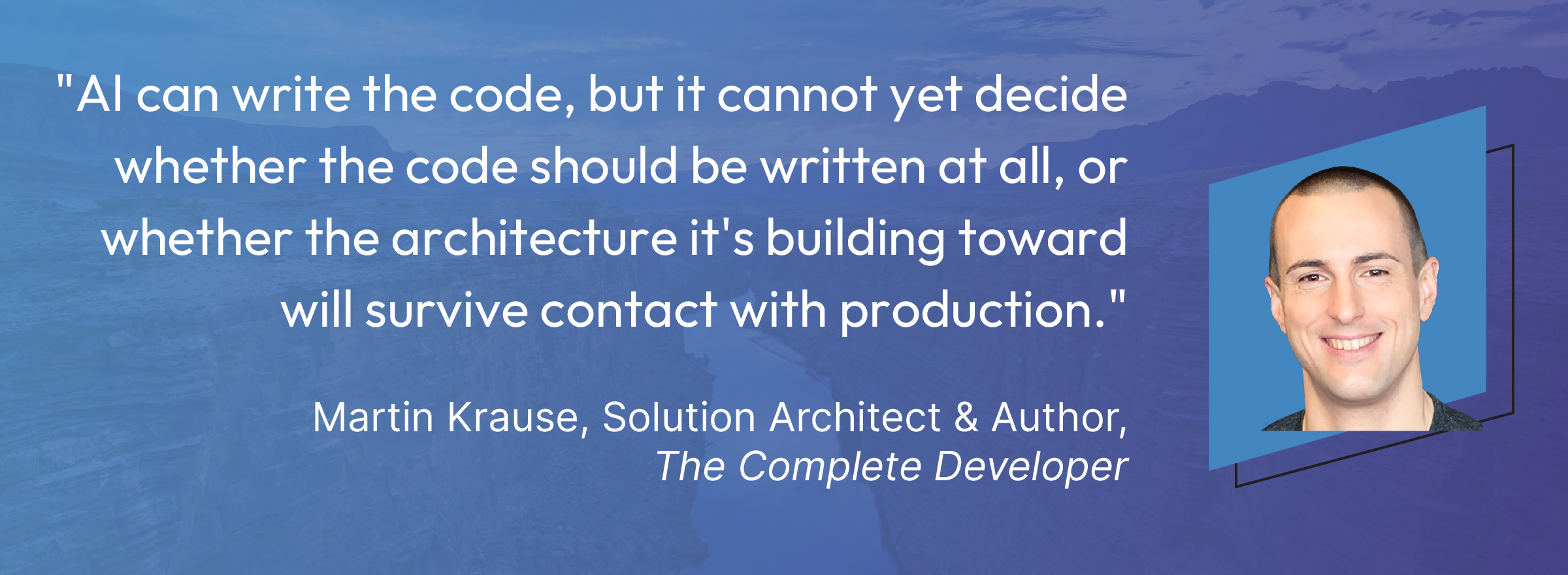
"What they've actually done," he says of companies that have cut senior engineers and leaned on AI to compensate, "is remove the judgment layer from their engineering organization. AI can write the code, but it cannot yet decide whether the code should be written at all, or whether the architecture it's building toward will survive contact with production."
There's a second cost that doesn't appear in most AI ROI models. AI-assisted development, powered by large language models, increases compute consumption at every stage of the pipeline: coding, testing, reviewing, debugging, documentation. The operating cost model that makes AI investments look efficient doesn't survive contact with scale. Krause points to examples that have already turned up in enterprise finance reviews:
- Uber burned through its projected AI budget for 2026 in the first four months
- Walmart capped usage budgets
"Companies are shipping AI with no monitoring and no clear owner or retraining plan, and they claim to be 'doing AI,'" says Fergal Glynn, chief marketing officer at Mindgard, an AI security company. "AI projects are dependent on fragile pipelines of disorganized data, which makes them slow and expensive, and hard to trust in production."
The scale of the damage is consistent across the data:
- 65% of organizations abandoned at least some AI projects for lack of skills.
- Fewer than half of AI projects reach production.
- Only 1% of companies have scaled AI enterprise-wide.
The Biggest AI Readiness Gaps Inside Engineering Teams
When technology leaders describe where the AI skills gap lives in their engineering organization, they tend to identify the same ones: hard-to-fill AI/ML roles, data scientists, specialist hiring at the top of the funnel. Disha Patel, a software engineer at Apple specializing in cross-platform mobile development and on-device machine learning, sees a different constraint.
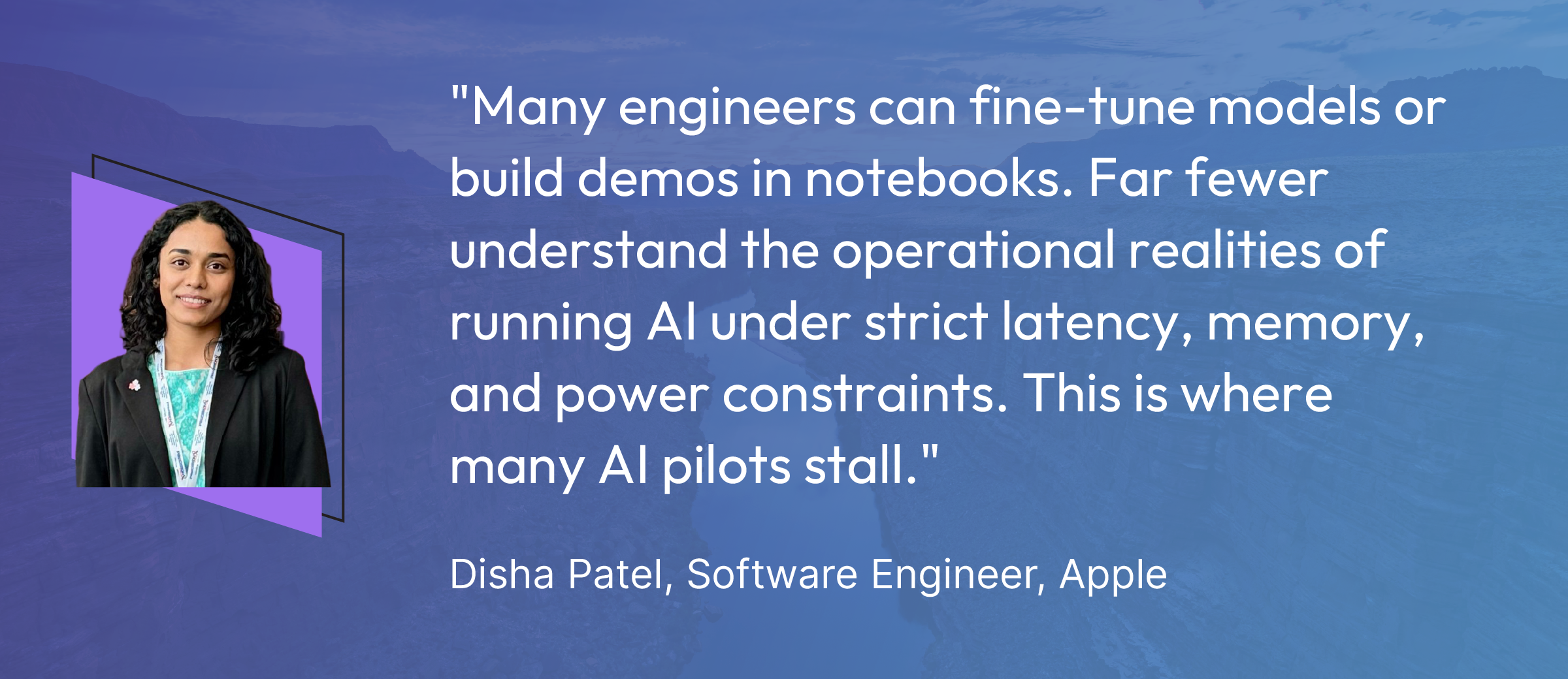
"Many engineers can fine-tune models or build demos in notebooks, but far fewer understand quantization, inference optimization, on-device deployment, model compression, or the operational realities of running AI under strict latency, memory, and power constraints," says Patel, whose published ML benchmarking research has mapped these tradeoffs. "This is where many AI pilots stall."
The skills include everything from MLOps maturity and edge inference to observability and deployment governance. Students graduate knowing PyTorch and TensorFlow with little exposure to shipping a model that runs reliably within production constraints. Patel saw this firsthand teaching iOS development at California State University, Fullerton. That curriculum-to-production gap carries directly into enterprise AI adoption efforts.
Jain's experience points to a separate dimension: what enterprise AI actually requires at the architecture layer. During his time at Amazon supporting the Global Supply Chain procurement team, he worked through a scenario that illustrates it. Managing a vendor dispute is not a single text-generation task.
A functional deployment requires one agent using natural language processing to parse the legacy contract PDF, a second to fetch real-time ERP transaction data, and a third to reconcile both and check compliance before a human reviews the output. "Engineering teams hit a wall because they are training devs on basic API calls instead of teaching them how to design these multi-agent workflows," Jain says.
Governance sits above all of it, or at least it should. Glynn describes organizations routinely shipping AI technologies with no monitoring, no retraining plan, and no designated owner. According to the Out of Sync report, 82% of leaders who named governance as their primary scaling constraint had not embedded AI policy in their workflows.
How Leading Companies Are Closing the AI Skills Gap
The organizations moving past the pilot stage share something more structural: deliberate decisions about how AI roles are defined, how capacity is built, and how results get measured.
Embedded AI Talent
Continuity is harder to hire for than capability, and it may matter more. The Out of Sync report found consistent differences across four outcome measures when comparing staffing models:
- Embedded long-term: 85% strong value capture, 66% structured training, 47% governance embedded
- Internal-only: 42%, 35%, 30% on the same measures
Delivery speed doesn't explain the gap. Both models perform similarly there. What explains it is continuity – the institutional knowledge and measurement discipline that build when the same engineers stay on a codebase over time, rather than walking out when a contract ends.
Workforce Augmentation
Most enterprise organizations can't hire their way out of the AI skills gap on a useful timeline. Engineers capable of designing, building, and maintaining production-grade AI systems are in short supply, and specialized AI roles routinely take six months or more to fill. Workforce augmentation provides access to that expertise without the wait.
Augmented teams bring specific AI skills into an existing organization: MLOps depth, AI infrastructure experience, production deployment expertise. No requirement to build those competencies from scratch.
For initiatives with defined scopes and clear capability gaps, augmentation matches the engagement to the need rather than creating permanent headcount around a temporary problem.
AI-Native Engineering Teams
Jain's "AI Orchestrators" framing points to something purely technical hiring approaches miss. The skill enterprise AI deployments actually require is the ability to design multi-agent systems that navigate legacy architecture, not the ability to use AI tools. Role definition is the structural prerequisite. When AI responsibilities are explicit and distributed across teams, training follows, measurement follows, governance follows. The Out of Sync survey found that role definition predicts training, measurement, and governance outcomes three times more strongly than org size or budget.
Continuous Upskilling
Krause points to what continuous upskilling actually needs to address: not tool proficiency, but judgment. The capacity to evaluate AI output critically, push back when needed, and stay intellectually engaged with code that wasn't written by hand.
One-time AI training events don't build that. Dr. Priyanka Dave, a workforce researcher leading an $83 million digital transformation initiative at Oregon State University, has studied why. Her peer-reviewed research in the IT sector found:
- Individual motivation alone predicts job performance by 7%
- With organizational learning systems in place, that figure rises to 23%
- Workplace learning independently accounts for 45% of performance impact
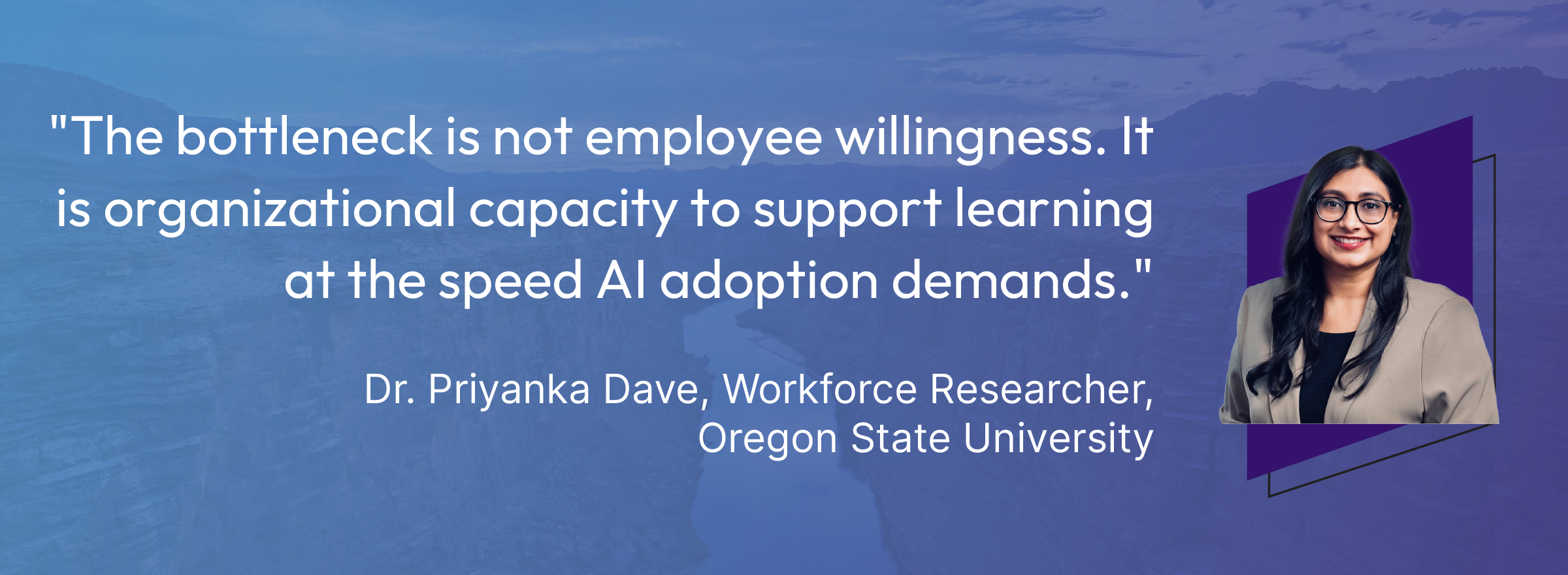
"The bottleneck is not employee willingness," Dr. Dave says. "It is organizational capacity to support learning at the speed AI adoption demands." That kind of skills development depends on workflow design, manager support, and genuine room to experiment. Most enterprise engineering organizations are deploying AI expectations into pre-AI structures that provide none of those conditions.
Cross-Functional AI Pods
The Out of Sync survey identified a 47-point confidence gap between HR leaders and Data/AI leaders on AI talent sourcing (31% versus 78%). A quarter of HR respondents didn't know how their organization adds AI engineering capacity at all. HR is the function responsible for workforce planning and the one most removed from where augmentation and role decisions actually get made.
Glynn frames the operational version of that gap stating, "They integrate AI into their core tools instead of running it as a one-time experiment run by their side teams."
Faster AI Experimentation Cycles
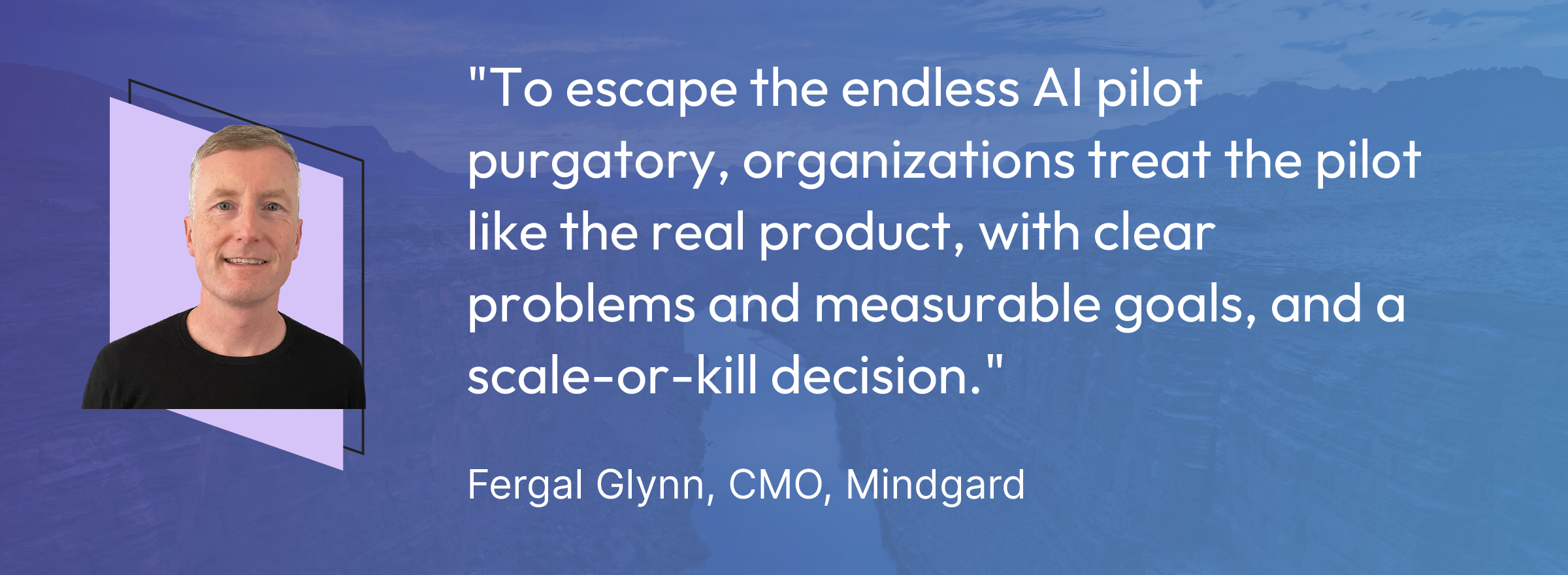
"To escape the endless AI pilot purgatory," Glynn continues, "organizations treat the pilot like the real product, with clear problems and measurable goals, and a scale-or-kill decision." Most pilots survive past their usefulness because there's no measurement infrastructure to justify killing or scaling them.
Only 19% of organizations in X-Team's research have standardized AI value measurement tied to finance or operating metrics. Getting data driven about which experiments to scale and which to kill is how organizations get out of purgatory.
What AI-Ready Organizations Do Differently
When the executive view dominates an organization's AI readiness, the operational picture gets missed until a project stalls, a hire falls through, or an initiative produces poor results.
The organizations genuinely ready to execute on AI matched capacity models to capability gaps, built measurement that finance recognizes, and treated AI readiness as an ongoing organizational investment rather than a hiring sprint.
Leaders who study how AI adoption strategy actually takes hold inside engineering organizations tend to find the same thing: The ones making effective AI progress treat it as an organizational design problem rather than a sourcing problem.
Patel describes the technical version of the same discipline. "The successful teams are investing in cross-functional AI infrastructure, platform engineering, and deployment-focused talent instead of relying solely on research-heavy skill sets."
The organizations that build this discipline now create a competitive advantage that compounds over time.
How X-Team Helps Companies Close the AI Skills Gap
Closing AI capability gaps requires the right engineers and a staffing model built around continuity. X-Team's 98% engineer retention rate is that model in practice: engineers who stay on the codebase long enough for measurement to mature, governance to embed, and institutional knowledge to accumulate.
Embedded Developers Integrated Into Existing Teams
Short-term contractors can finish a project. What most AI initiatives require are engineers who understand your codebase, your architecture decisions, and your team's working patterns over time. Teams evaluating custom software development outsourcing options often optimize for speed but continuity is the key to better outcomes.
Access to AI-Ready Engineers
The sourcing bottleneck most enterprise teams hit is about finding engineers with real depth in AI app development, MLOps, and production-scale systems rather than engineers who can master prompt engineering but not ship. X-Team's network covers the deployment-focused skills that are the hardest gaps to close through traditional hiring.
Expertise Across SaaS, Fintech, Gaming, Media, Medtech
The AI readiness gaps that stall enterprise initiatives are domain-specific. The compliance constraints in Fintech, the latency requirements in Gaming, the data architecture in Media and Medtech are not generic engineering problems. Engineers who have worked inside those domains bring context that shortens the runway from pilot to production.
Flexible Scaling for AI Initiatives
As AI roadmaps shift and initiative scope changes, the right capacity model scales with them. Adding headcount through traditional hiring when priorities change means months of lag and permanent overhead. Flexible engagement lets your team move at roadmap speed without carrying the risk.
Faster Execution Without Long Hiring Cycles
The average enterprise AI hire takes months. X-Team deploys pre-vetted, senior AI engineers directly into your workflow. That cuts the sourcing bottleneck that stalls initiatives before they start. The focus stays where it belongs: on building.
X-Team's research maps where the AI skills gap is widest and what the organizations closing it have in common. Download the AI Talent Readiness Report or take the AI Talent Readiness Assessment to see where your organization stands.
Ready to bring embedded AI-ready engineers into your organization? Contact X-Team.
SHARE: