52.54 Kilometers and Still Moving: Morten Barklund on the Pull of Ultrarunning
By: X-Team
May 25, 2021 3 min read
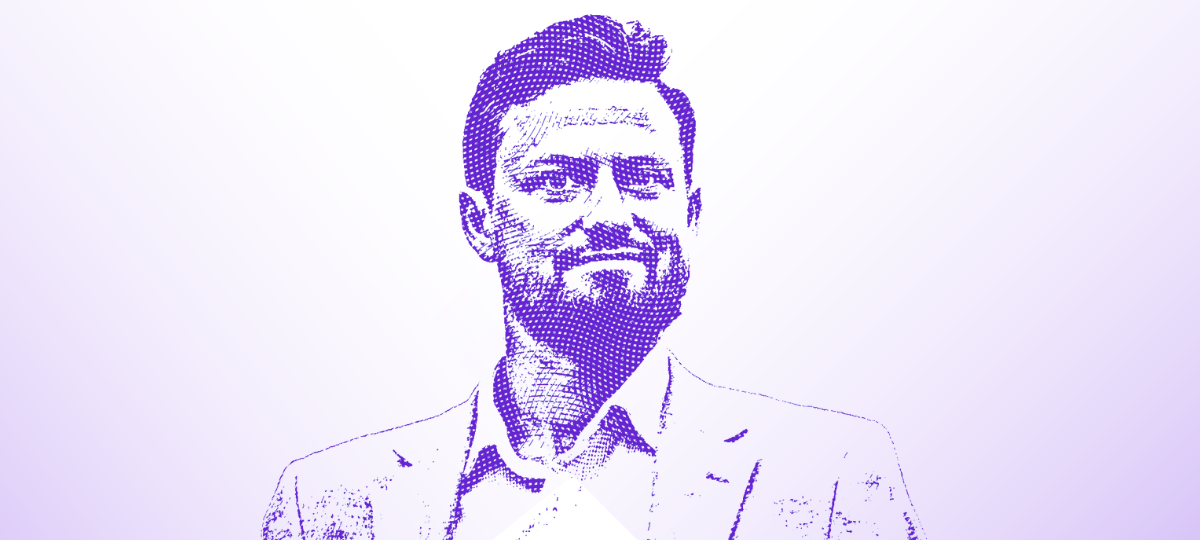
At kilometer 40, most people would stop. Morten Barklund kept going.
Running for House Corgi during X-Team's Season 8 running event, the full-stack engineer had gone out without a target distance in mind. He took it easy — walking the inclines, keeping a loose pace — and somewhere past 40 kilometers he did the math and realized a personal record was within reach. He pushed to 52.54 km. He briefly considered 60, but it was getting dark and he didn't have the right clothing. He went home instead, completely spent in his joints and feet, and went for another run the next morning.
In this story, Barklund, a full-stack engineer at X-Team, traces the running history that led to that 52-kilometer day, describes what it's like training and racing in New York City and maps out the preparation for his next goal: 80 kilometers.
From Casual Runner to Long-Distance Convert
Barklund ran seriously around 2012, reached good shape and then spent the better part of a decade running casually — whenever he had spare energy. The shift back came in spring 2019, when he started treating it as something more deliberate.
That August, he ran 25 kilometers for the first time — a 5×5 km relay race he ran solo, all five legs by himself. "It was pretty epic," he says. "But I was truly busted after that because I hadn't thought about refueling at all. So I was shaking, felt cold, etc." The lesson absorbed, he kept going. By May 2020, he had a professional training plan and was putting in significantly more time and distance.
What draws him is not pace but endurance. He describes looking with awe at ultrarunning records — athletes absorbing more and more strain, just continuing to move. "I find being able to keep going so much more impressive than running faster," he says. He also runs with audiobooks, letting the narrative carry him through the repetitive stretches and into different worlds.
His favorite distance has shifted over the years. He has run at least 20 competitive half marathons and enjoyed every one, but the half marathon is now a regular long run in his weekly schedule rather than a goal event. He prefers the 10 km now for its balance between power and endurance — a distance where he can hold a hard pace and manage his energy reserves more cleanly.
Running in New York City
Barklund lives in Manhattan, and he is candid about the limitations of running there.
"Surprisingly underwhelming," he says of the experience. There are three main locations — the East River path from Battery Park to 40th Street, the Hudson River path from Battery Park to the northern tip and Central Park — and all of them are reliably crowded, subject to roadworks and closures and, after enough laps, tedious. "They're awesome locations for sure," he adds, "but they do become tedious over time."
The weather compounds the challenge. Coming from Northern Europe, Barklund was used to warm winters and chill summers. In New York the winters are cold enough to make breathing difficult and the summers are hot and humid in ways that push pace and perceived effort well beyond what the same workout would require in a cooler climate. He has adapted to both extremes, though the range remains considerable.
For his 52.54 km run, the walk/run strategy he used — slowing to a brisk walk at any incline or tricky terrain — was what allowed him to cover the distance without destroying his muscles. The joints and feet paid the price anyway, but his legs were recovered enough to run again the following day, which he counts as a win.
The Gear and the 80 km Goal
Barklund's kit for long-distance running is extensive. On the road he rotates between Hoka One One Rincon and Asics Gel Nimbus shoes; on the trails, Brooks Cascadia. He carries a 1.7-liter running backpack for long runs and a handheld 0.4-liter bottle for medium efforts. His GPS watch — a Garmin Vivoactive 3 — was on its last legs at the time of this interview, with a broken heart rate monitor and unreliable GPS, and he was expecting a Garmin Venu 2 to arrive shortly.
The next distance on his list is 80 km — 50 miles — which would be his longest ever. When the interview took place he was coming off a 10 km personal record block, running around 40 to 50 km per week, and planning to rebuild his weekly mileage to 70 to 80 km before shifting the focus to pure endurance: increasingly long runs up to 50 km, hill training and back-to-back efforts — a sprint run in the morning followed by a long run in the afternoon — to practice running on tired legs.
His advice to anyone just starting out is characteristically practical: get good shoes. Not necessarily expensive ones, but shoes that fit and are slightly large, because feet swell during a run. Everything else, he says, can be sorted out later. The shoes are where you start.
Ready to build work you're proud of? Apply for an open role at X-Team.
SHARE:


TABLE OF CONTENTS